Warden
A grid-operations copilot where the model never touches the physics: an LLM narrates, a real power-flow solver decides.
- Result
- Winner, E.ON track
- Built with
- Laurentin Harter
- Stack
- LLM orchestration · pandapower · N-1 contingency analysis

I was not even supposed to be at this one. I signed up late, figured why not, and it turned into one of the better why-nots I have said yes to.
CDTM is a very cool place, full of very cool and very smart people. The challenges actually made us think, which is rarer at these things than you would hope. We spent a long time just arguing through which one to chase before we committed to anything. We went with E.ON.
The thing about handing a grid to a language model
The project was Warden, and I built it with Laurentin Harter.
The honest part: I spent too long thinking about the product instead of just building it. At a hackathon that is usually a mistake, the clock is the whole game. This time the thinking was the point, and I think it is the biggest reason we won.
Everyone wants AI to help run the power grid. Nobody wants to say the quiet part out loud, which is that you cannot hand a grid to a model that can hallucinate. A chatbot making something up is a bad paragraph. A grid model making something up is millions of people in the dark. You cannot explain a hallucination at that scale, so you cannot ship one.
So we did not. The whole idea of Warden is that the model never touches the physics. It all runs on real physical laws, and the model just narrates what the physics says. That split is the best part of Warden, and it is the whole thing.

How it works, briefly
The language model never computes a single volt. It orchestrates a real power-flow solver, pandapower, and every action it proposes gets re-verified on the full AC cascade before an operator ever sees it. The model proposes. The physics decides. Nothing gets marked as safe unless the solver confirms the grid is still N-1 secure, which is the operator's actual standard: the grid has to survive losing any single component. Warden sweeps all 187 N-1 contingencies on every diagnosis.
In our hardest scenario it redispatched 1,794 MW across 50 generators to clear a 168% line overload and still hold the grid N-1 secure. The full loop, scan the grid, plan a response, verify it against the physics, runs in seconds, and it shows its work at every step.
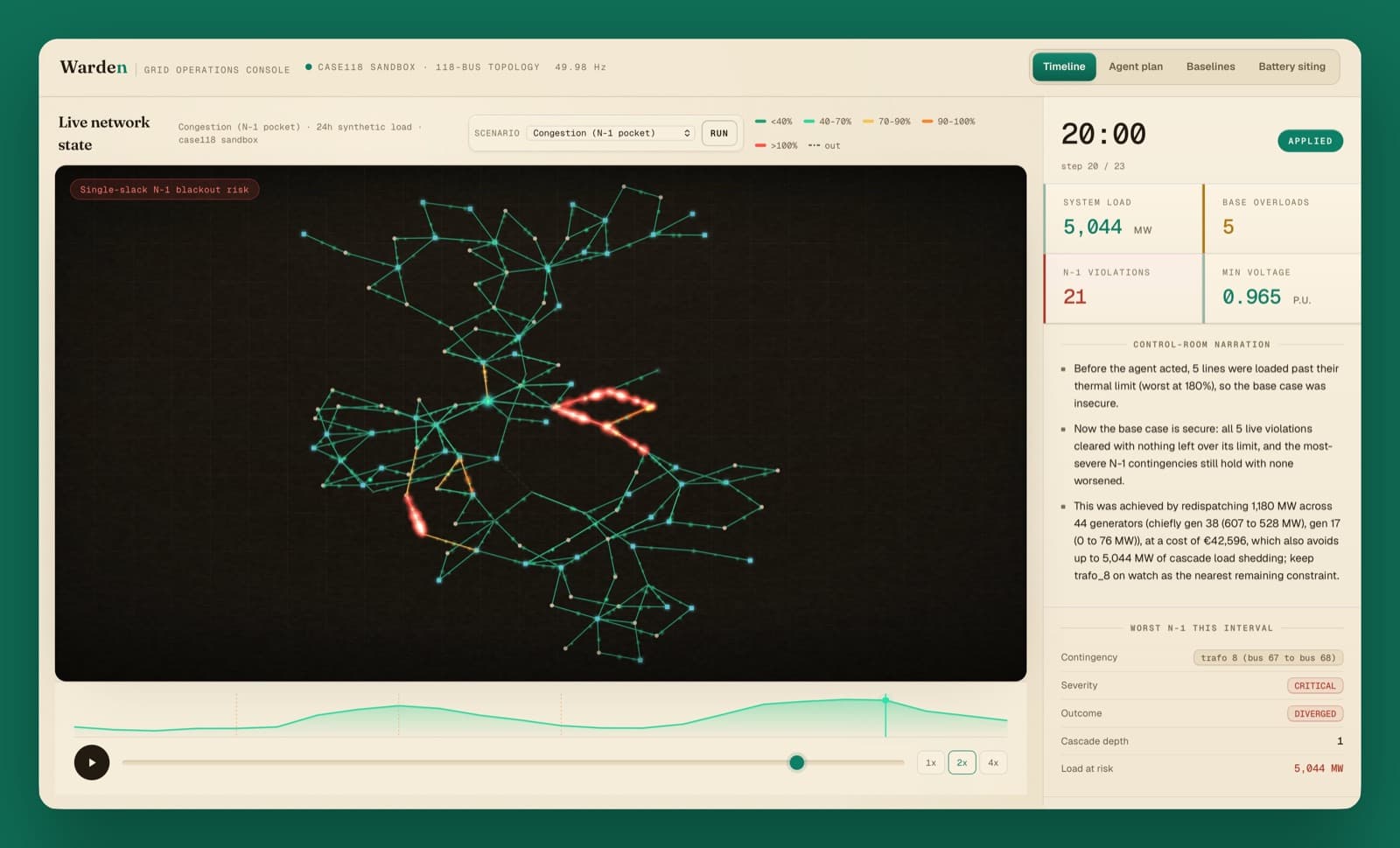
The interesting part was never pointing an LLM at a grid. It was building the harness that makes a model safe to use somewhere it absolutely cannot be trusted on its own. Let the model read the messy situation and say something an operator can understand. Let the solver tell the truth about whether the plan holds. Put a hard gate between them. You get the upside of both without betting the grid on a model's confidence.
The win, and what it meant
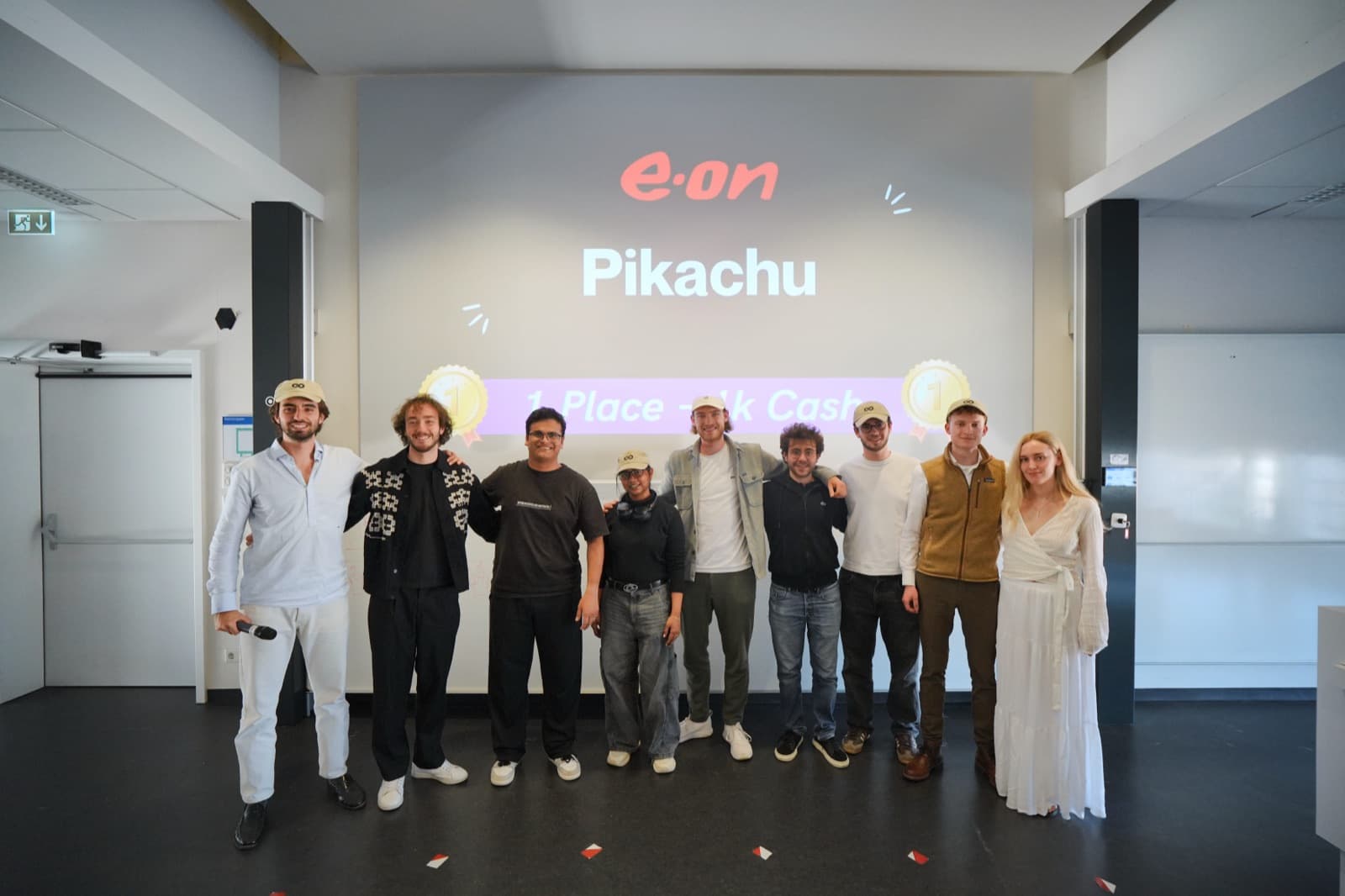
Winning was a boost, but the quieter thing mattered more. After my first win at Unite I half wondered if it was a fluke. This one told me it was not, that I had something in me I could pull off more than once, on purpose. That was worth more than the track.
Beautiful weekend. Cool place, cool people, met a lot of good ones. Looking back, this was some of the best preparation I could have had for everything that came after.
I am still working on Warden. There is a real version of this idea and there are grid operators who could actually use it, and I want to keep pulling on it. We will see where it goes.